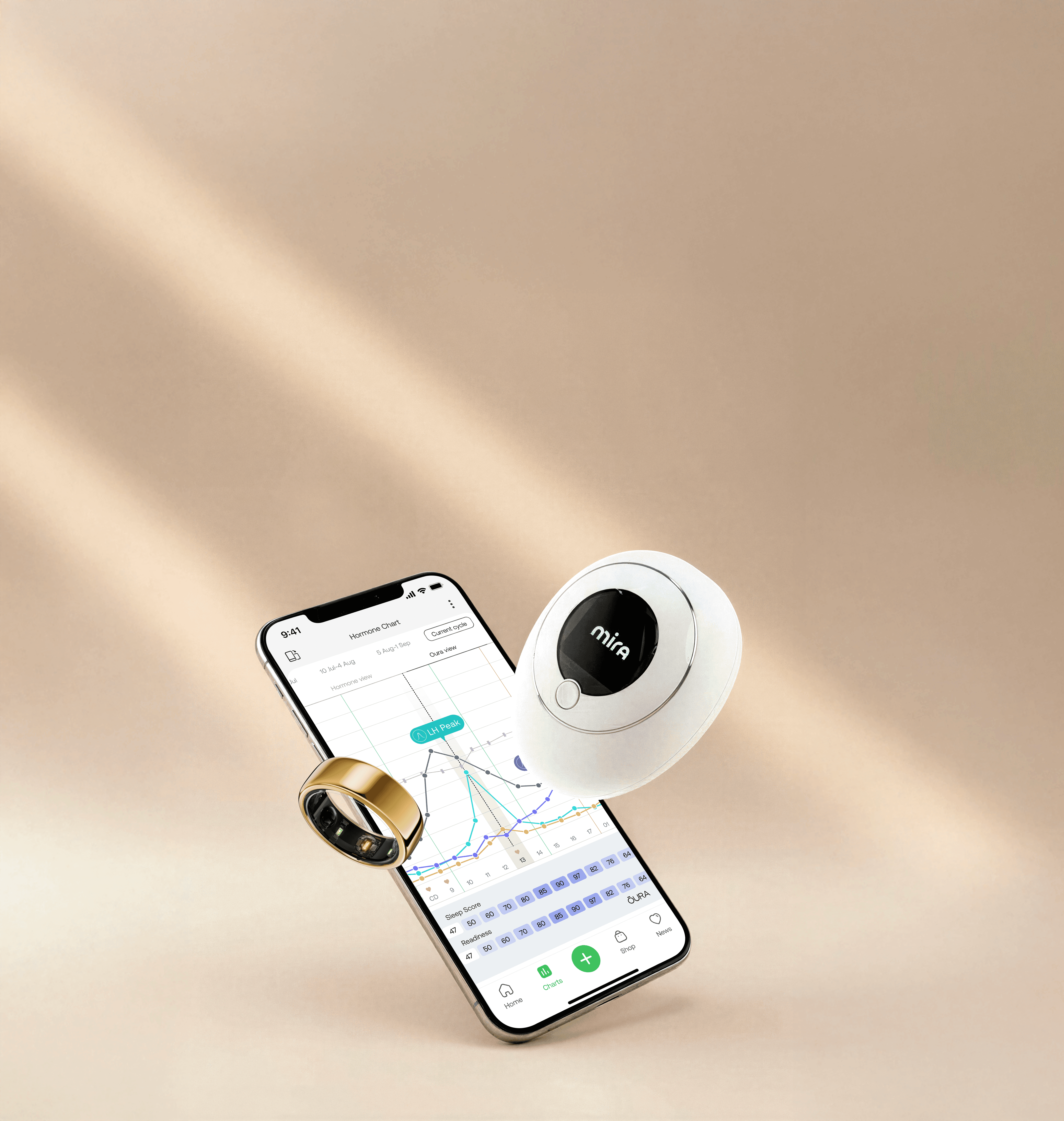
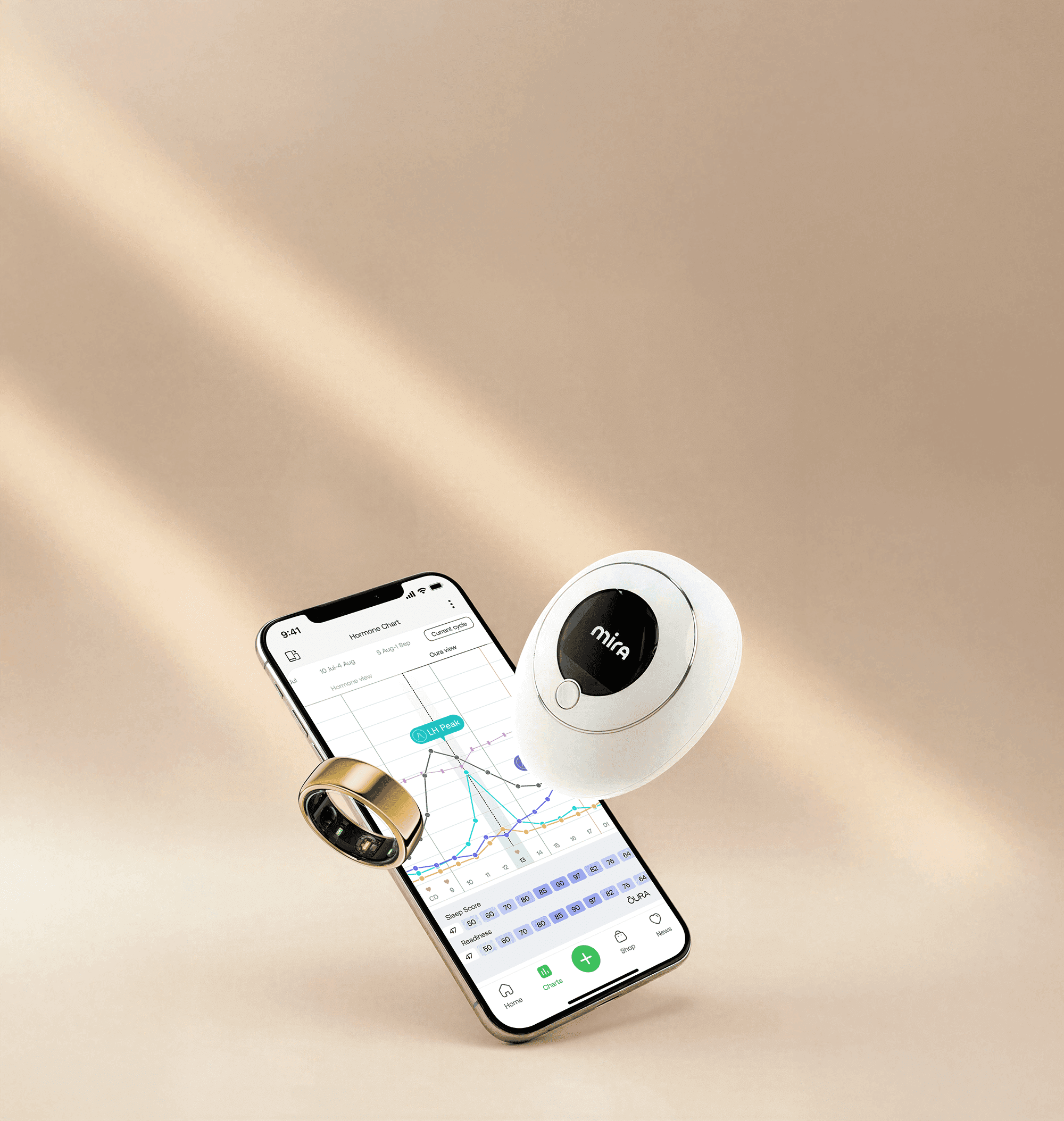





Combine Hormone Intelligence™ for Perimenopause with Oura Insights — in the Mira App
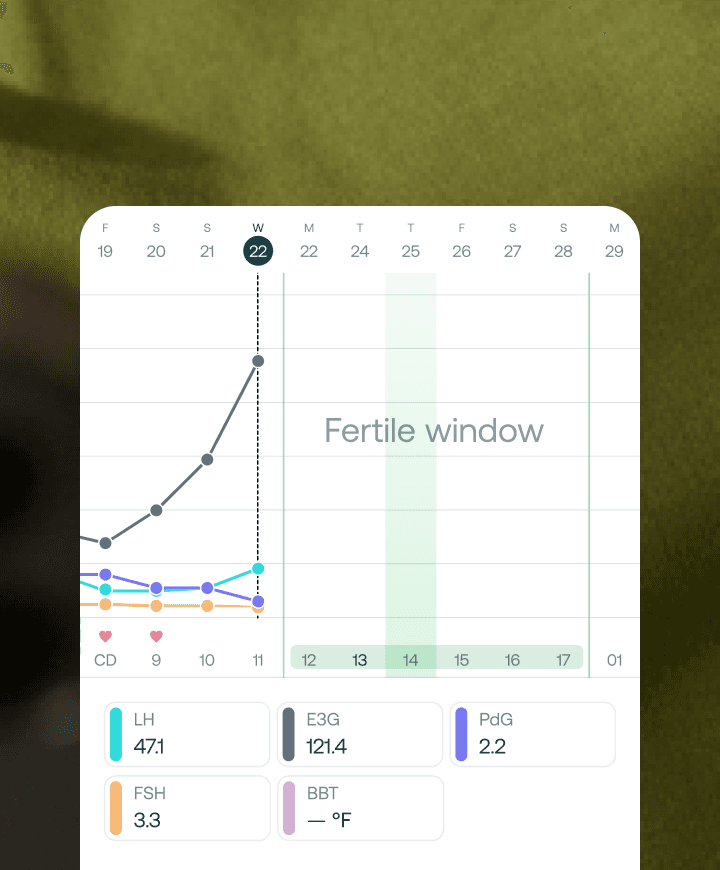
Track symptoms and help define your fertility stage
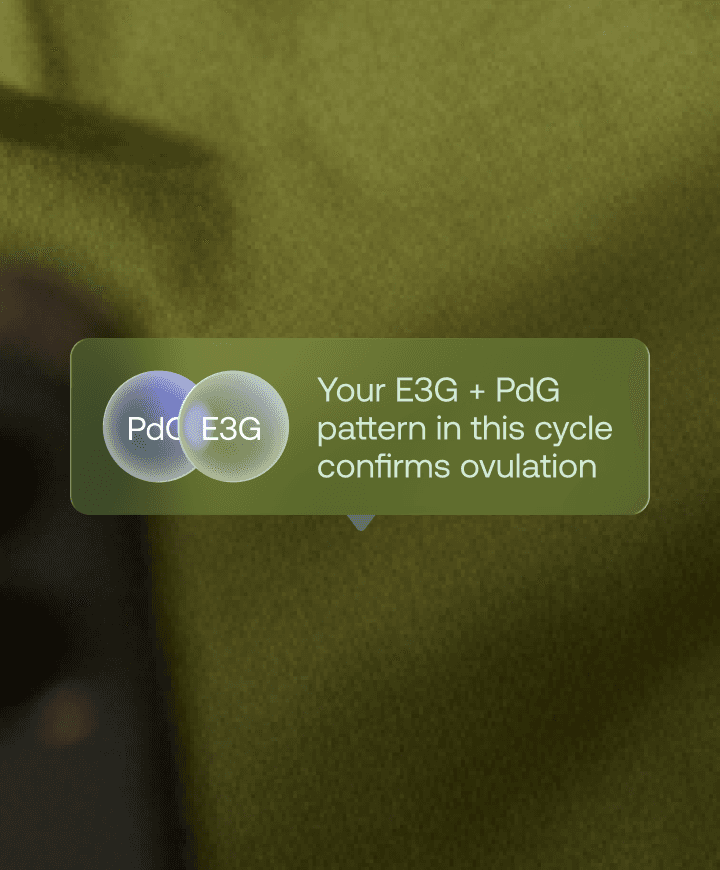
Monitor ovulation during perimenopause
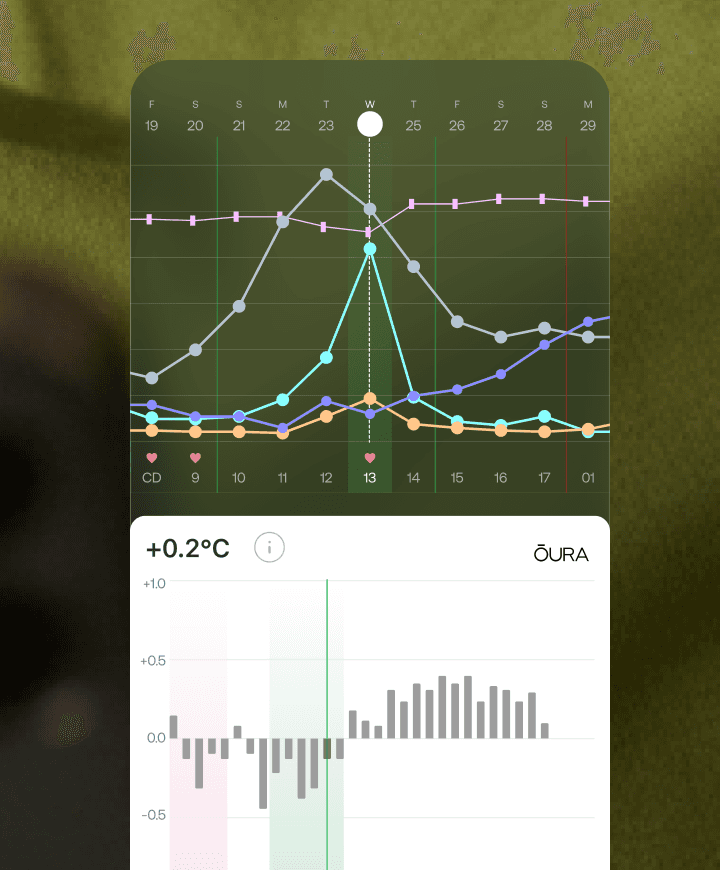
Hormones + Oura temperature trends and sleep data together



Combine real-time data from both Mira and Oura to determine your fertility stage, support conception, and clarify perimenopause symptoms.


Why Connect Oura and Mira?
Oura shows you what your body is doing. Mira shows you why.
Symptom monitoring
Ovulation confirmation
Cycle-by-cycle patterns
Clinical confidence
Oura Alone
Tracks temperature trends, sleep scores and stress patterns
Estimates ovulation from temperature trends
Identifies recurring temperature trends and sleep scores
Helps you monitor symptoms
Mira Alone
Links symptoms to hormone levels
Confirms that ovulation still occurs by PdG levels
Provides real-time hormone mapping
Helps identify hormone irregularities
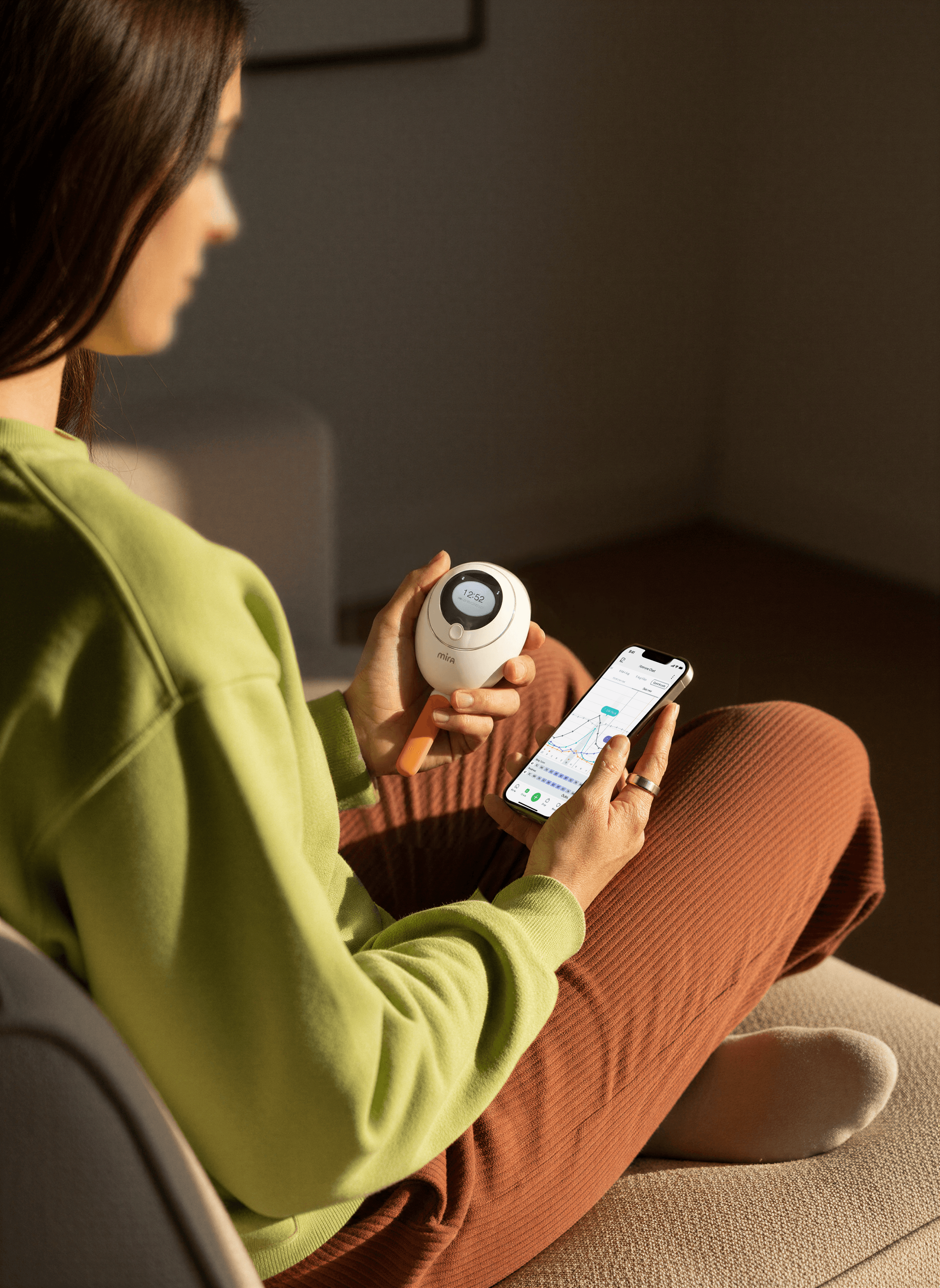
How Mira and Oura work together
One dashboard. One complete view of your hormones. Zero blind spots.
84% of women 35+ felt relief after defining their fertility stage with Mira
Mira uses the same science trusted in fertility clinics.
As accurate as blood tests
Works for irregular cycles & imbalances
Smart AI personalizes your results
Get Mira
Navigate perimenopause with science


Track 4 key hormones to assess ovulation patterns, detect anovulation, and gain insight into your fertility stage.

Mira helps identify hormonal changes that could be causing or intensifying symptoms—so you can finally address the root cause.

See your unique Hormonal Fingerprint™ with accurate readings even with irregular cycles.
Get Mira
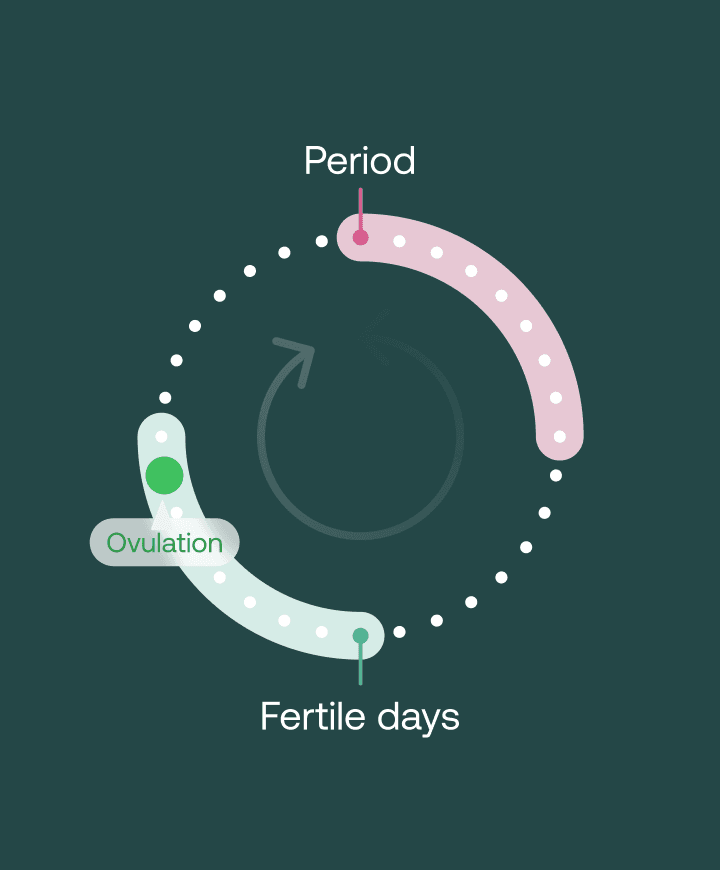
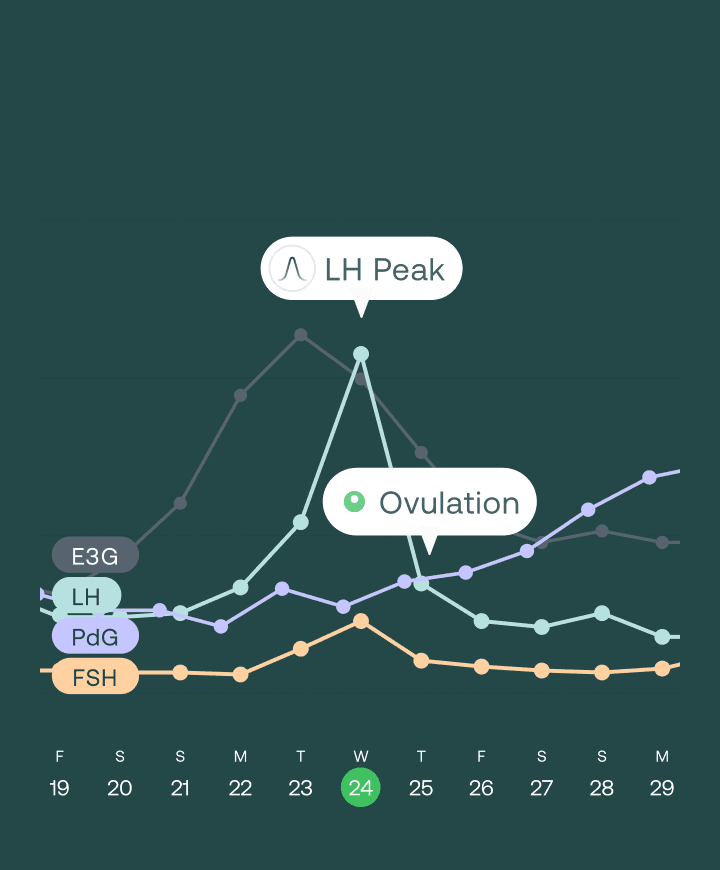
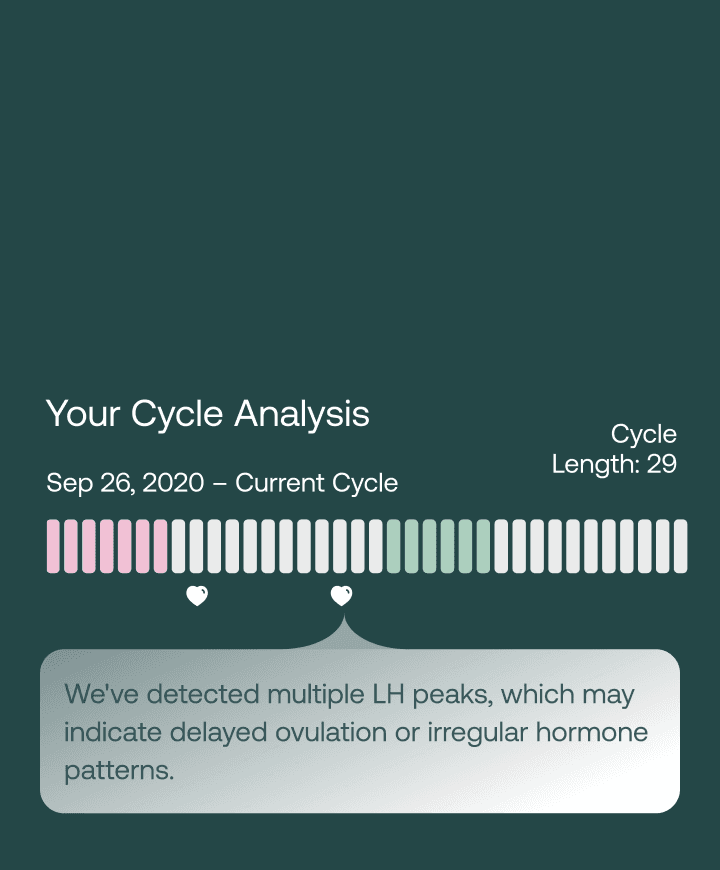
Mira helps you through your unique challenges
Over 250,000 women worldwide trust Mira’s technology


Mira is the fastest, smartest way to help you get clarity.
Real, certified lab‑grade technology—right at home.
FDA-Registered
MDSAP Certified
ISO 13485
Get Mira
FAQ
Do I need an Oura Ring to use Mira?

Does using Mira replace Oura?
Can Mira confirm ovulation?
Is this useful if my cycles are irregular?
I have PCOS. Can Mira help me?
¹ Based on a 2024 pilot study by Mira and Pelex Med: 36 IVF candidates TTC >1 year, 44% conceived within 2 months using Mira tracking + Pelex support. Results are preliminary and not peer-reviewed. For comparison, CDC reports a 42% success rate per IVF transfer. “10x faster” refers to Mira's 44% rate vs. ~4% for 2 months from typical use of the calendar method (source). Individual outcomes may vary.
² WHO, 2023 infertility report: 1 in 6 people globally affected. (source)
³ Moglia et al., BMC Women’s Health (2016): “83% of menstrual‑tracking app users inaccurately predicted their fertile window.”
⁴ Stanford JB et al., Human Reproduction**:** “Mistiming intercourse outside the true fertile window can reduce conception likelihood by up to 50%.”
⁵ Based on a 2025 lab study by MiraLabs comparing Mira to other popular at-home fertility trackers for LH, FSH, E3G, and PdG. “7× more accurate” refers to average alignment with lab results (range 2×-18× for different hormones); “3× more reliable” refers to the average improvement in linearity (range from 1-4× for E3G to 4-6× for LH); and “up to 6× more sensitive” is based on lower detection limits (range from 1-2× for PdG to 6× for E3G). Individual results may vary. Mira is not a diagnostic or contraceptive device.
Oura Ring is not a medical device and is not intended to diagnose, treat, cure, monitor, or prevent medical conditions or illnesses. Please do not make any changes to your medication, nutrition, or workouts without first consulting your doctor or another medical professional.